Automated Hevo Data Pipeline Digest
Every morning, WebRun opens Hevo, checks every active pipeline's sync status and row counts against its usual pattern, exports the day's status to Google Sheets, and logs an incident entry in Notion for anything that failed or looks anomalous.
How do I get a daily status check on all my Hevo pipelines?
WebRun checks every active Hevo pipeline each morning, reading its sync status and row count against the usual pattern. It logs the day's status to Google Sheets for history, and any pipeline that failed or looks anomalous gets an incident entry in Notion, so a quietly broken pipeline never goes unnoticed for long.
- Broken pipelines get caught the same morning, not at month-end
- Every incident is tracked to resolution instead of forgotten
- Healthy pipelines clear themselves from the incident log automatically
Built for data engineering teams · analytics engineers · data platform admins · BI teams
What does WebRun do on every run?
The exact actions WebRun takes, in order - in plain language, so you can adjust anything.
-
WebRun signs in and gets to work
Opens
hevodata.comin a real browser with your saved login - no setup, no API keys. -
1
Hevo Data - check pipeline sync status
- Open Hevo and list every active pipeline
- Check each pipeline's sync status and row counts for the last run
- Flag any pipeline that failed or has a row-count anomaly
Done when Every active pipeline has a checked sync status.
-
2
Google Sheets - export the status
google.com

WebRun opens Google Sheets to export the status. - Add a row for each pipeline with its status and row count
- Keep history so patterns are easy to spot
Done when This morning's status is logged for every pipeline.
-
3
Notion - log incidents
notion.so
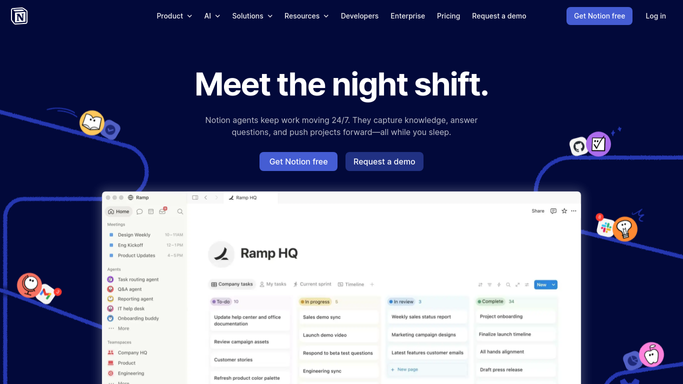
WebRun updates Notion to log incidents. - Log an incident entry for any pipeline that failed or looked anomalous
- Close out entries for anything resolved since the last check
Done when The incident log reflects every currently open pipeline issue.
How is each run configured?
Secure by default
Connect once, stays signed in
WebRun signs in once and keeps each session in a persistent environment, so every run picks up right where it left off.
Every action is checked against this policy before it runs.
Questions, answered
Will it retry a failed pipeline or fix the source connection?
No. WebRun only reports the status and logs incidents. Retrying a pipeline or fixing a source connection is left to a human.
What counts as a row-count anomaly?
A pipeline whose synced row count differs sharply from its usual pattern, which often signals a broken source or an unexpected schema change.
What happens once a pipeline recovers?
It reads the live sync status from Hevo each morning, so a pipeline back to healthy is closed out in the Notion incident log automatically.
Related templates
Put this on autopilot.
Turn it on in minutes - or have our team set it up for you.