How to Automate Conservis
Because Conservis keeps load tickets, contract deliveries and input stock current through the day, the automation worth adding acts on them: WebRun posts a nightly harvest digest, flags grain contracts behind their delivery pace, drafts input reorders at your thresholds and matches emailed supplier invoices to Conservis deliveries.
 Written by
Elliot Nakamura
Platform writer
 Reviewed by
Nora Whitfield
Editorial lead
Every harvested load becomes a ticket in Traction Conservis
Conservis is farm operations software for large row-crop and permanent-crop operations, now part of Traction Ag and sold as Traction Conservis. Traction aims it at multi-entity farms with big acres and big teams, and its login page lists separate Conservis sign-ins for row and permanent crops, in the United States and in Australia.
Managers plan the season in Conservis, then send work orders and spray tickets to operators, who mark when a job starts and when they finish. At harvest each load becomes a ticket that goes straight into inventory, assigned to a bin or other storage and later delivered to a buyer against a grain contract. Seed, chemical and fertilizer in the shed are in that inventory too, and several people can work in it at once, so the person keying tickets and the person hauling grain see the same numbers.
After the last truck of the day, someone totals the load tickets by field
During harvest the farm manager asks every evening for the day's numbers: bushels by field, the moisture and test weight on the loads, how much of the crop is in and which fields are running below the yield goal. Conservis holds every ticket, and someone still adds them up by field and sends the totals round.
Grain contracts run on delivery windows. Each week the grain marketing team works out how many bushels each contract still needs and whether the hauling pace will get there before the window closes, setting the contract screens against the deliveries one contract at a time.
In the shed, inputs run down until a product reaches the level where the input manager reorders, and the order goes to the supplier by email. Supplier invoices arrive by email too, and before anyone pays one, its lines should match what Conservis shows was delivered, product by product.
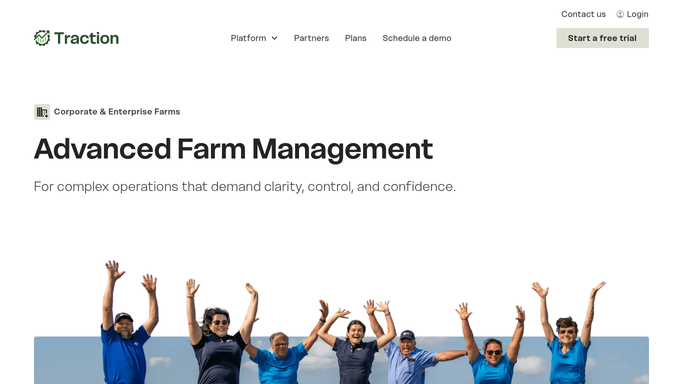
Traction Conservis matches grain settlements to contracts and deliveries
In Traction's enterprise suite, which Conservis now belongs to, grain positions, deliveries, settlements and contracts sit in one place, and settlement matching accounts for every dollar and bushel.
Managers build plans by field, crop, input and scenario and adjust them as markets move, and reports set plans against actuals, with field activity, FSA, acreage and yield reports besides. A company can export its data to its own data warehouse, as Lawson Grains does for board reporting, and Traction Conservis is Ag Data Transparent Certified.
On Traction's accounting side, integrations bring in John Deere Operations Center and Climate FieldView records and import bills from FS and Keystone Cooperative. The contract screens show what each contract still needs, inventory shows what is on hand, and harvest records hold today's tickets. Turning those into a weekly pace check, a reorder or a nightly digest falls to whoever opens Conservis, and invoices from suppliers outside those integrations land in an inbox.
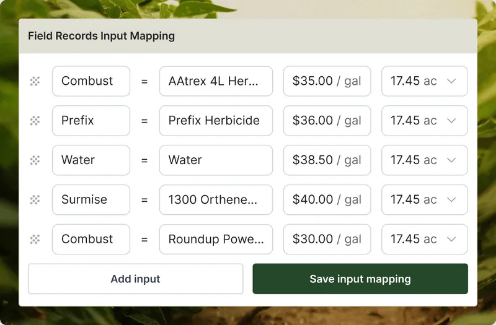
Monday's grain digest opens on the contracts that will not fill in time
While harvest is on, an 8 p.m. post in the harvest channel gives the farm team the day: bushels by field with moisture and test weight, the day's total and the season's, the share of acres harvested, and any field tracking below its yield goal. The harvest log gets the same figures, and a day with no tickets gets a one-line note.
On Mondays the grain marketing team reads every active contract with its commodity, buyer, remaining bushels and delivery deadline, grouped by grain. The contracts whose hauling pace will not finish them inside the window come first, so the team can book extra loads in time, and a tracker sheet keeps each week's totals.
The input manager reviews a purchase order in Gmail each morning for every supplier with a product down to its reorder point, product by product with suggested quantities. A tracker row marks anything still low after two days.
The bookkeeper's Monday sheet sets each emailed invoice line against the delivery record in Conservis, marks variances over two percent in red, and keeps unmatched lines on a tab of their own.
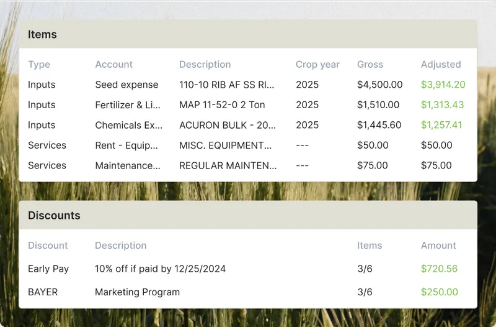
Grain buyers and elevators hear nothing until the farm writes to them
Everything these jobs post stays inside the farm, so buyers, elevators and suppliers see nothing until a person writes to them. Only the input manager sends the one message aimed outside, the purchase order, from its Gmail draft.
WebRun is an AI agent that works a real Chrome browser. Its Conservis user comes through Traction's login page, under row crop or permanent crop, and reads the screens these jobs need, while Slack, Gmail and Google Sheets take what it writes. The reorder draft and the invoice check run all year; the harvest digest and the contract tracker belong to the months between the first load and the last delivery.
Questions people ask
Does the contract tracker warn before a contract overfills?
No, it watches the other side. Each Monday it sets delivered bushels against every active contract and flags the ones where the pace so far will not cover what remains before the delivery window closes.
Can the reorder draft go to more than one supplier?
Yes. Tell it which supplier handles each input category and it writes a separate Gmail draft for each, listing the items at or below their reorder points with suggested quantities.
What happens to an invoice line with no matching delivery?
It goes on a separate tab of the reconciliation sheet for someone to look at. Matched lines whose price or quantity differs by more than two percent are marked, and you can change that tolerance.
Sources
- Enterprise Farm Management | Traction Traction Ag's page stating that Conservis and Granular Business are now part of Traction through acquisition, for large multi-entity farms, and describing grain positions, deliveries, settlements and contracts with settlement matching, planning by field, crop, input and scenario, work orders, and reports including FSA, acreage and yield.
- From Spreadsheet Struggles To Up-To-Date Inventory, Grain And Harvest Tracking A Traction Conservis customer describing each harvested load generating a ticket that goes into inventory, delivery tracked by customer and contract, seed, chemical and fertilizer in storage, and several users working at once.
- Lawson Grains Traction's case study of an Australian grain grower using Traction Conservis for spray tickets sent to operators, work orders, month-end input inventories, budgets consolidated into financial statements and exported to a data warehouse, and noting that Traction Conservis is Ag Data Transparent Certified.
- Login | Traction Traction's login page, which lists separate Conservis sign-ins for row crops and permanent crops, and for Conservis Australia.
- Integrations | Traction Traction's integrations: Climate FieldView, John Deere Operations Center, FS Billing, Keystone Cooperative, Paylocity, Plaid and Zenwork Tax 1099.
4 ready-made Conservis workflows
Each one names the apps it touches and the exact steps it takes. Open one to read what it will do, then turn it on.
Want one of these running on your own Conservis?
Show WebRun the process once and it will run it on schedule, in your own private browser environment.