How to Automate AMCS
Inside AMCS, Vision AI flags contamination and overfilled containers, and the Platform automates pricing, invoicing and customer order requests. Emailed swap requests, contracts nearing their end date and roll-offs left on site need someone to read AMCS each morning or Monday and draft the follow-up, a job WebRun does in a browser.
 Written by
Julian Adeniyi
Retail operations
 Reviewed by
Samuel Adeyemi
Integrations writer
A construction site's 30-yard roll-off is a record in the AMCS Platform
AMCS Group's Platform runs commercial and industrial collection, construction and demolition, municipal and residential services, recycling and hazardous waste. It holds each customer's contract with its pricing hierarchy, plans routes and dispatches trucks, records weigh-ins at the scale house, and raises the invoices.
On a construction job, the customer's record centres on a roll-off: a 30-yard at the north gate, delivered for a four-week job and swapped whenever the site manager calls it full. Drivers capture photos on their mobile devices, and customers can send order requests and see their collection history through the AMCS Customer Portal.
Customer service reps, dispatchers, scale house operators, depot managers and the account managers who look after large commercial customers all work in it. A bigger operator runs several depots, each with its own yard of containers.
The 6:50 email about a full 30-yard lands before dispatch is in
A site manager on a construction project emails at 6:50am: the 30-yard at the north gate is full, swap it before noon. The customer service rep finds the site and the container in AMCS, puts the swap on the dispatch board and writes back. By nine there are a dozen more.
Containers also stay out longer than planned. A roll-off delivered for a four-week job is still on site in week nine, and the depot manager finds out when counting the yard.
Agreements run out on their own timetable. An account manager who wants to call before a commercial contract ends has to find the end dates first, account by account, and then write to each customer. The billing team, meanwhile, checks yesterday's overweight and contamination exceptions before any of them turns into a charge.
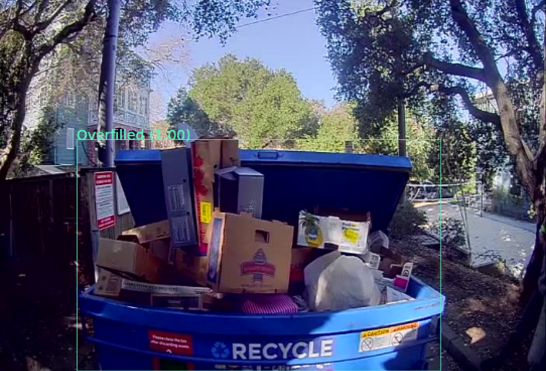
Vision AI puts each overfill and contamination event in the Platform with a photo
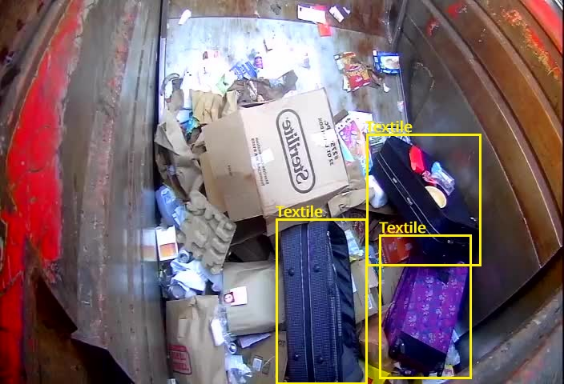
AMCS Vision AI uses cameras on collection vehicles to catch overfilled containers, incorrect material separation and service exceptions such as blocked access, on every route. Each event surfaces in the AMCS Platform with photographic evidence, so operators capture more of the chargeable ones.
The Platform automates pricing across contract hierarchies, plans routes and dispatch, and raises invoices, and its Customer Portal takes order requests and payments from customers.
In April 2026, Platform release 2026.1 added an agentic AI framework with built-in rules and oversight. AMCS said the agents built on it, for customer service, self-service, transport validation and dispatch, were being validated in lighthouse projects with select customers.
A swap request that comes by email rather than through the portal sits in the customer service inbox until a rep reads it. Contract end dates sit on each agreement and delivery dates on each container record, so the renewal list and the overdue count are built by whoever goes looking, and the renewal note is the account manager's to write.
A Google Calendar event marks each roll-off swap before dispatch confirms it
Dispatch's morning roll-off queue in Slack carries the 6:50 email from the north gate alongside every container AMCS flags as full, due for pickup or waiting on a swap. Each swap has a Google Calendar event with the container ID, site and size, set on the requested date or the next one free, and a request whose date clashes with availability carries a flag. Once the date is right, the rep sends the confirmation from Gmail drafts.
On Mondays the depot managers read the week's container count in the ops channel: deployed, available and overdue, with each overdue roll-off's site address and days out. The full snapshot goes into a Google Sheet, so the yard's history builds week by week.
An hour later the account managers read their renewal list, commercial contracts ending in the next 60 days ranked by contract value, and each contract has a renewal email drafted in Gmail that names the expiry date and asks to talk terms.
Every morning the billing team works from yesterday's overweight and contamination exceptions, kept in the incident log with a running count since Monday, and checks each one before invoicing.
The roll-off job puts swaps on Google Calendar by itself
The roll-off job takes one step without a person: it puts each swap on Google Calendar as a dispatch event. The rep sends the swap confirmations and the account managers send the renewal notes, both from drafts in Gmail; the container count and the exception list go only to internal channels.
WebRun is an AI agent that works a real Chrome browser. Here it holds an AMCS user login for the screens it reads and the Gmail, Google Calendar, Slack and Google Sheets accounts it writes to. In AMCS it only reads. On routes without Vision AI cameras, the morning exception list is where drivers' overweight and contamination notes come together for billing.
Questions people ask
Does it book the swap in AMCS?
No. It reads the container and the request, creates a dispatch event in Google Calendar and drafts the confirmation in Gmail. The job itself is booked in AMCS by dispatch, and a requested date that clashes with availability is flagged in Slack first.
Is the container count split by depot?
No. It is one report covering every container the login can see, with each overdue container's site address and days out. The Google Sheet keeps a dated snapshot each week, which a depot manager can filter to their own yard.
How much of the contamination list does Vision AI already cover?
Partly. Vision AI finds the events and puts each one in the Platform with a photo. The list copies yesterday's exception notes into the incident log and a Slack alert for the billing team, with a running count for the week, and bills nothing.
Can renewals start earlier than 60 days out?
Yes. Sixty days is the default, and the window can be set to 30, 45 or 90 days to fit the sales cycle. A contract already extended in AMCS drops off the list, because each run reads the current end date.
Sources
- end-to-end waste & recycling software | AMCS AMCS's description of the Platform: contract and pricing hierarchy setup with pricing automation, self-service portals, route planning and dispatch, photo capture for field teams, weigh-ins, invoicing and payments, and REST APIs, for commercial and industrial, construction and demolition, municipal and residential, recycling and hazardous waste operations.
- Efficient waste operations with AI Waste Management | AMCS Describes Vision AI's onboard cameras detecting overfilled containers, incorrect material separation and service exceptions, with each event surfaced in the AMCS Platform with photographic evidence.
- AMCS Platform 2026.1 Launches with new Agentic AI Framework and operational enhancements | AMCS AMCS's 9 April 2026 announcement of an agentic AI framework with rules, controls and oversight, and of agents for customer service, self-service, transport validation and dispatch being validated in lighthouse projects with select customers.
- Customer Portal | AMCS The AMCS Customer Portal's features: new customer sign-up, order requests, invoice and payment processing, reporting, an activity calendar, ticket and collection history, and customer communications.
- Contract Management Software for Waste & Recycling Companies | AMCS AMCS's contract management: contract and pricing hierarchy setup with pricing automation.
4 ready-made AMCS workflows
Each one names the apps it touches and the exact steps it takes. Open one to read what it will do, then turn it on.

Want one of these running on your own AMCS?
Show WebRun the process once and it will run it on schedule, in your own private browser environment.