How to Automate Attio
Attio Workflows run on record changes, schedules and webhooks, its agents research and score, and the HTTP request block reaches any system with an API. Figures a portal shows only to a signed-in user, such as a portfolio company's runway, are copied in by hand today, or read in a browser by WebRun, an AI agent.
 Written by
Aiko Tanabe
Product researcher
 Reviewed by
Yara Haddad
Data operations
Attio lets each team design the objects its CRM tracks
In Attio the team decides what the CRM holds. People, Companies and Deals come as standard objects, and on the Pro plan a business can add its own, such as investors, portfolio companies, partners or product workspaces, each with its own attributes.
Linking a Google or Microsoft mailbox fills the workspace from inbox history, so contacts and companies arrive with their conversations attached, and enrichment fills in company details. Relationship attributes, also on Pro, tie one object to another: the fund to the founder, the deal to the partner who referred it.
The customers on Attio's own list include startups such as Lovable and Railway and venture firms such as Union Square Ventures and Seedcamp. In both, a head of operations adds an object or an attribute without asking a developer.
The associate copies each portfolio company's figures from the monitoring portal
At a seed fund, the associate opens each portfolio company's page in the monitoring portal after month end and copies revenue, burn and runway onto its record, so the partners' meeting has a list it can sort. At a startup selling to large companies, the founder signs in to the buyer's vendor portal to check on the security questionnaire before chasing the signature. The partnerships lead reads new referrals out of a partner's portal and creates each deal by hand.
Each figure starts ageing the day it is copied. A runway figure from March still on the record in May misleads the partner who sorts by it, and because every company was copied on a different day, nobody can say which values are current.
Workflows reach any system that offers an API or sends a webhook
Attio's Workflows start on a record change, a recurring schedule, a webhook or a manual run, then branch and loop through blocks that create and update records, send an HTTP request to another system or hand a step to an agent. Every plan includes workspace credits for them each month: 250 on Free, 1,500 on Plus, 10,000 on Pro. A run takes the permissions of the user it is assigned to, and any run can be opened to see what each agent read, decided and did.
The agent library is built for sales work around the CRM. The Web Agent researches accounts for the latest on the web, and the Follow-Up Agent recaps each call, updates the deal and drafts the next move. Attio also runs an MCP server with read and write tools for AI assistants.
For data held elsewhere, the routes are an app from Attio's directory, a webhook the other system sends, or a workflow's HTTP request to its API. Each needs the other system to offer something to connect to. A monitoring portal that shows a company's figures only on its own screens, to a signed-in investor, leaves the associate to sign in and copy them, and the same goes for a buyer's vendor portal and the founder.
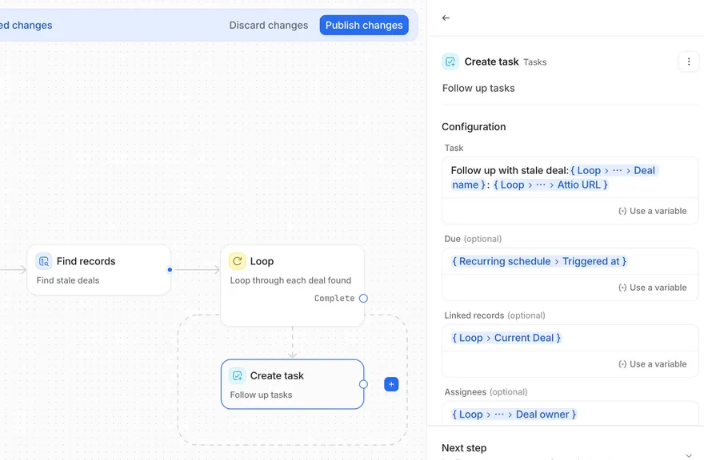
Each portfolio company's runway sits on its own record
The partners sort the portfolio list by runway, and each value sits beside the reporting month the monitoring portal shows for it, so a company that has not reported yet stands out by its date. The investor relations lead sees a new commitment from the fund administrator's portal on the investor's record within the week.
At a startup selling upmarket, each enterprise deal carries its security review status from the buyer's vendor portal, current as of that morning, and a deal waiting on the questionnaire is visible in the pipeline view without anyone asking the founder.
On Pro, where relationship attributes live, a referral from a partner's portal becomes a new deal already linked to its Partner record, and the partner's own page lists every deal they have sent.
At a fund, the companies in an accelerator's demo day portal, which only signed-in investors can browse, arrive as records on a sourcing list with their batch noted, ready for the associate's first pass.
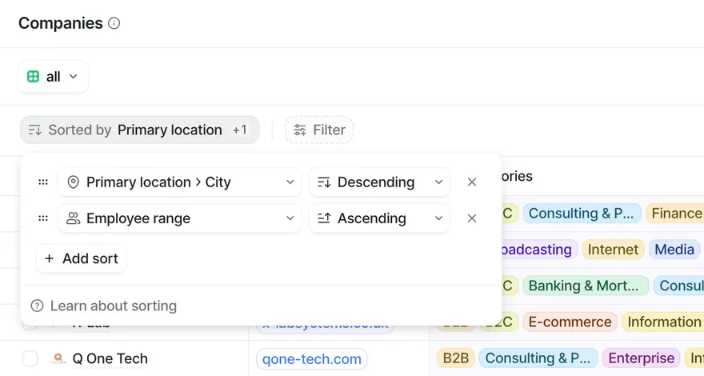
The month-end portal round runs on a schedule
The month-end round of the monitoring portal means one company page, then one Attio record, for every company in the portfolio. WebRun is an AI agent that works a real Chrome browser, signed in as you, and it makes that round on a schedule, plus a morning check of the vendor portal during a live deal.
In Attio it edits attributes, creates the referred deal and sets its relationship attribute, but deleting a record is not one of its jobs. A note to a founder or an investor sits as a draft in the associate's mailbox until the associate sends it.
For new records, one job on this page fills the missing attributes and assigns an owner; others nudge the owners of deals quiet for two weeks and post a Friday scorecard to Microsoft Teams, close to what Attio's Pipeline Review Agent builds.
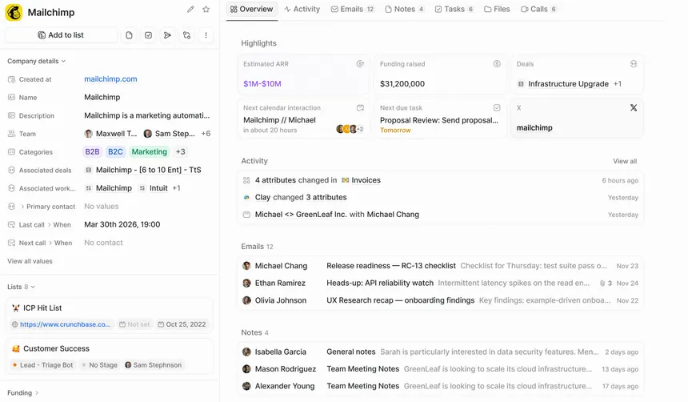
Questions people ask
Can it fill custom objects and relationship attributes?
Yes, on Pro and Enterprise, the plans that have both. Setting the Partner on a deal also adds the deal to the partner's record, because Attio keeps the two sides of a relationship in step. On Free and Plus it works with the standard objects you have enabled.
Can it be kept out of the fundraising pipeline?
On Pro and Enterprise, yes: put its user in a team that sees only the objects and lists the job needs. On Free every user sees and edits the whole workspace, and on Plus access is set for all members together.
Will the record show when a figure was read?
Yes, if you add a date attribute beside it, such as Runway as of, which the agent fills with the reporting period the portal shows. On Pro, Historical values reports also show how an attribute has changed over time.
Sources
- Attio llms.txt Attio's own summary: an AI-native CRM for startups and builders, with People, Companies and Deals or custom objects, email and calendar sync that fills contacts and companies from inbox history, and customers including Lovable, Railway, Union Square Ventures and Seedcamp.
- Workflows | Attio Workflows triggered by record changes, schedules, webhooks and manual runs; the agent library with a one-line description of each agent; runs that inherit the assigned user's permissions and can be opened to see what each agent read, decided and did.
- Workflows block library | Attio Help Center Trigger blocks including Webhook received and Recurring schedule, and action blocks including Create or update record, Send HTTP request, Parse JSON and the Web agent.
- Attio plans and features | Attio Help Center Workspace credits of 250, 1,500 and 10,000 a month on Free, Plus and Pro; custom objects and up to 10 teams on Pro; a fully visible workspace on Free; Historical values reports on Pro.
- Relationship attributes | Attio Help Center Available on Pro and Enterprise; a relationship attribute is a pair, so adding Record A on Record B adds Record B on Record A.
- Attio AI (llms.txt) Covers AI that classifies and summarises workspace data, automated enrichment, the research agent that works on the web, and an MCP server with read and write tools.
3 ready-made Attio workflows
Each one names the apps it touches and the exact steps it takes. Open one to read what it will do, then turn it on.

Want one of these running on your own Attio?
Show WebRun the process once and it will run it on schedule, in your own private browser environment.