I spent the last week digging into Clawdbot and WebRun, expecting to write a standard "X vs Y" comparison. Instead, I realized I was comparing a Swiss Army knife to a construction crane. They both cut things, technically. But that's not really the point.
The Lobster in Your Pocket
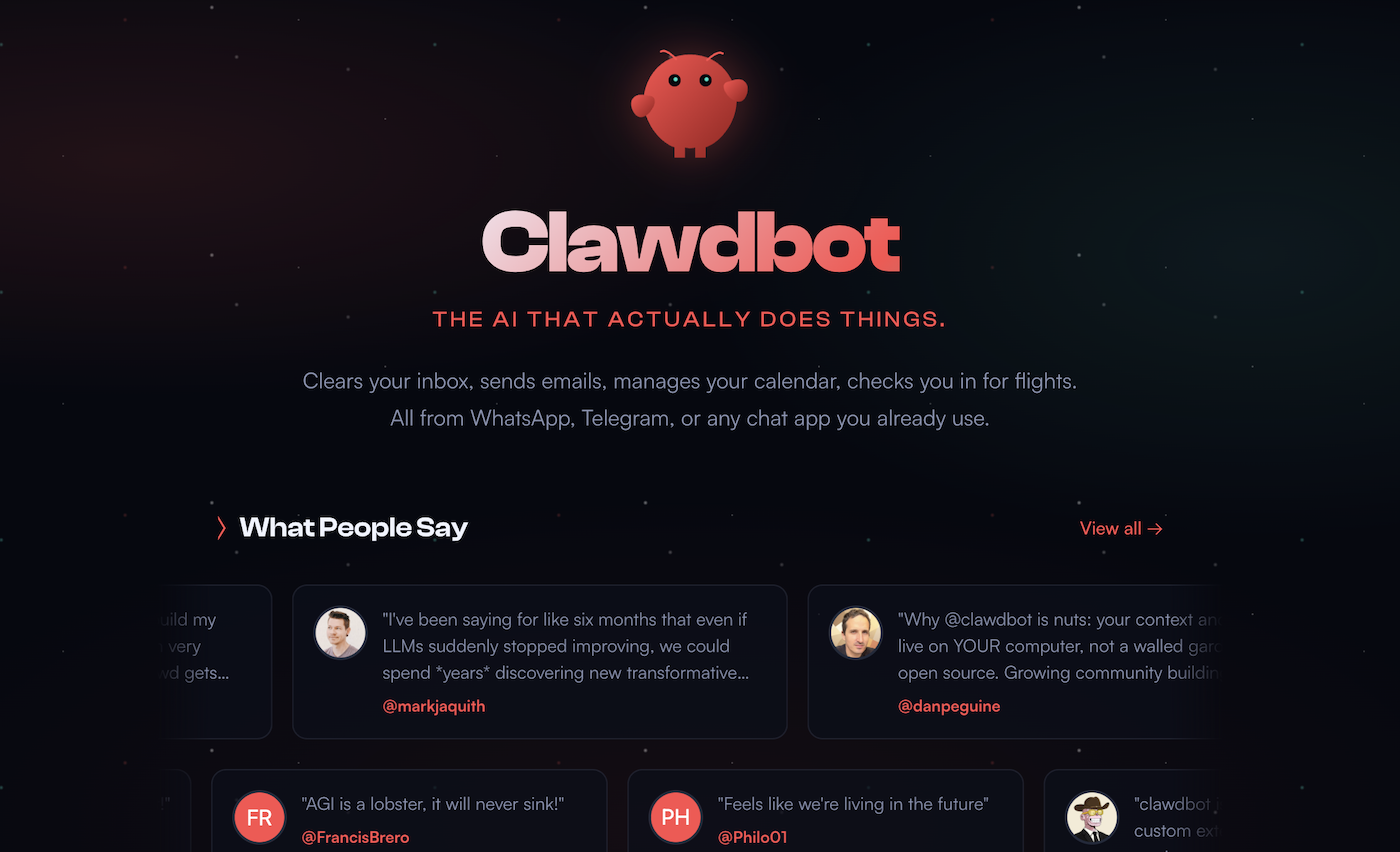
Peter Steinberger's Clawdbot has 8,000+ GitHub stars and a borderline cult following. The pitch: run an AI assistant on your own hardware that lives inside WhatsApp, Telegram, Discord, or whatever messaging app you actually use. It remembers your conversations. It uses your browser, logged into your accounts. It's Jarvis, if Jarvis ran on a Mac Mini in your closet.
The community loves it. Someone built a system that transcribes 1,000+ WhatsApp voice messages, cross-references them with Git commits, and generates a searchable knowledge base. Another person photographs a recipe, extracts ingredients, maps them to a grocery store, and adds everything to an online cart—idea to shopping cart in under five minutes.
This is personal automation. Your browser. Your accounts. Your machine. The appeal is obvious: nobody else touches your data.
The downside is also obvious: you're running production infrastructure in your house.
The Other Thing
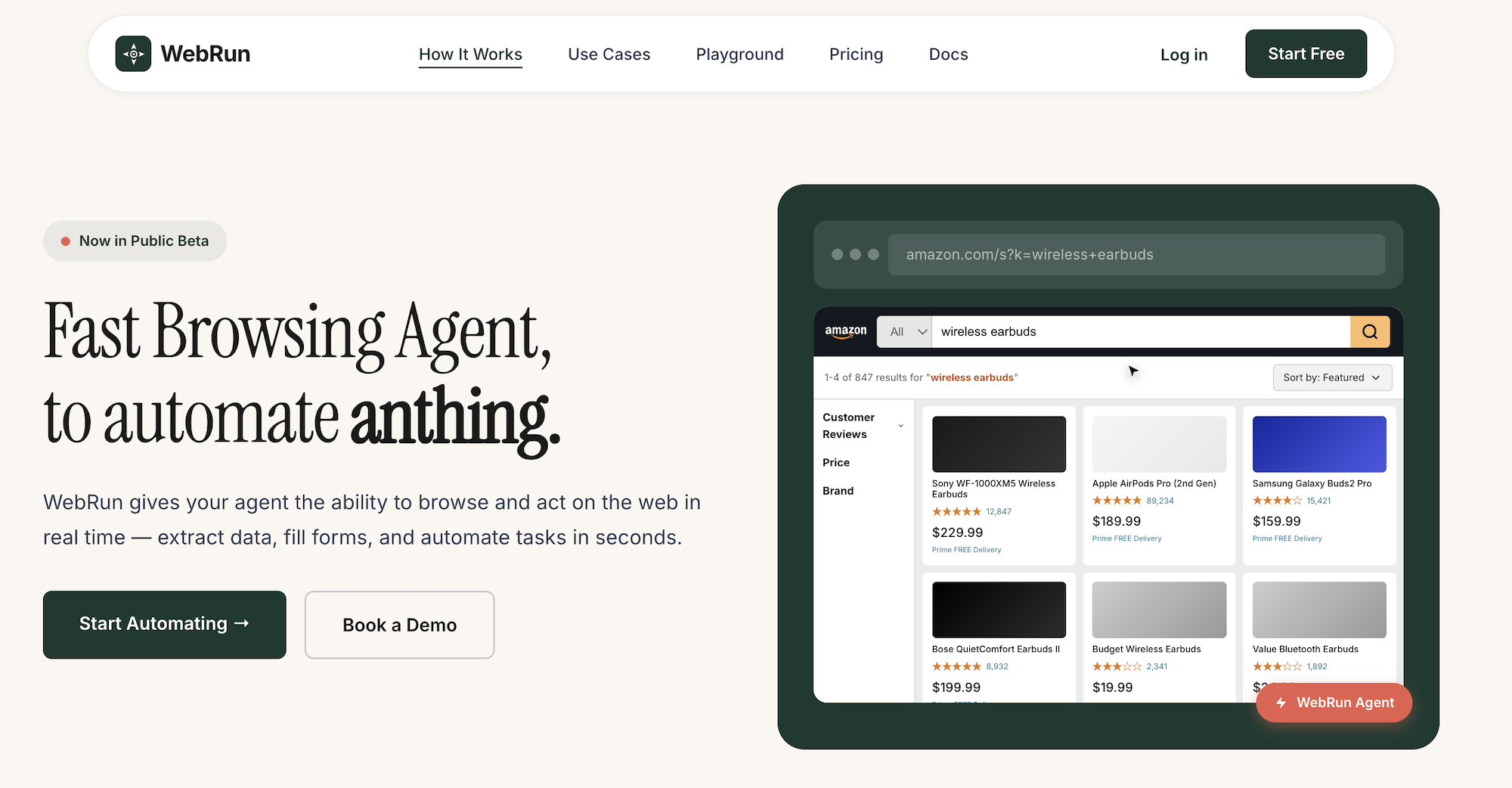
WebRun does something different. It's browser automation infrastructure—real Chrome browsers running on real cloud desktops, accessible through an API. You send a task in plain English ("search LinkedIn for engineering managers in San Francisco, return their profiles as JSON"), and an AI agent executes it.
The technical claims are aggressive: sub-100ms time to first action, 125× faster than traditional automation. I was skeptical until I understood the architecture. They built a hybrid CNN-LLM system from scratch instead of bolting AI onto Playwright. The vision model sees the page and acts directly—no brittle CSS selectors, no breaking when websites update their layouts.
What caught my attention: they run headful Chrome on actual desktop environments, not headless containers. This matters because bot detection (Cloudflare, PerimeterX, DataDome) specifically looks for headless browser signatures. WebGL calls, canvas fingerprinting, GPU acceleration—it all works natively because there's an actual GPU.
They also have persistent desktop sessions with a file manager built in. The browser session survives across multiple tasks, and you can manage files within it. I haven't seen this elsewhere.
Why the Comparison Doesn't Work
Here's where the "vs" framing breaks down:
Clawdbot is for you. It's a personal assistant that happens to have browser automation as one of its many tools. The magic is the messaging integration, the voice wake, the persistent memory across conversations, the fact that it uses your logged-in sessions. You talk to it like a person.
WebRun is for developers building products. It's infrastructure. You're not chatting with it; you're making API calls. The value is scale (unlimited concurrent sessions), reliability (managed cloud, not your hardware), and integration (REST, WebSocket, MCP, OpenAI-compatible endpoints).
A solo developer tinkering with home automation should probably use Clawdbot. A startup building a lead enrichment product should probably use WebRun. These aren't the same person solving the same problem.
Where Each Actually Wins
Clawdbot is better when:
- You want an AI that follows you across messaging apps
- You need to automate tasks that require your personal accounts
- Data privacy matters more than scalability
- You enjoy configuring things (and you will be configuring things)
- You're building a product that needs browser automation
- You need to run 50 tasks simultaneously
- You can't afford downtime because your Mac Mini kernel panicked
- Bot detection is a real concern
- You need to watch what's happening (live video streaming)
- You don't want to maintain infrastructure
The Real Question
The choice depends on what you're actually building.
If someone asks "which is better for my personal AI assistant?"—Clawdbot, and it's not close. The multi-channel messaging alone makes it irreplaceable for that use case.
If someone asks "which should I use for my SaaS product's web automation feature?"—WebRun. Self-hosting browser automation for production workloads is a full-time job, and your customers don't care about your infrastructure war stories.
The mistake is thinking these tools compete. They're aimed at different people solving different problems. Clawdbot is building the AI assistant everyone dreamed about when Siri first launched. WebRun is building the plumbing that makes AI agents actually work at scale.
Both have a future. Neither replaces the other.
If you're evaluating browser automation for a production use case, WebRun offers a free trial. If you want a personal AI assistant and don't mind getting your hands dirty, Clawdbot is open source and surprisingly fun to set up.